August 31, 2026 - 658 views


Andrew Gilligan calls for Homerton principal's removal. But when read closely, it is a character prosecution built on loaded language, guilt by association and a grievance nearly two decades old.
At 6.50am on Monday, The Spectator published an article carrying an extraordinary verdict: “Simon Woolley is not fit to lead a Cambridge college.”
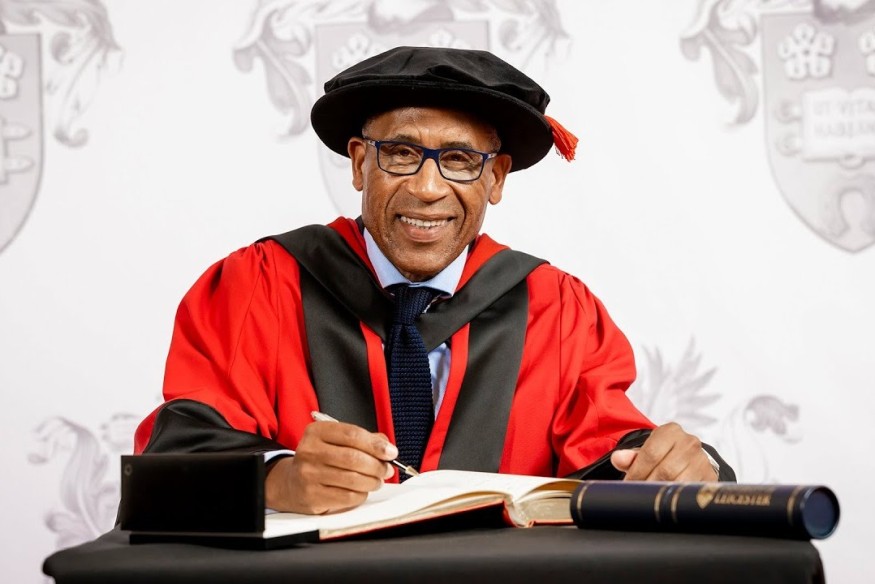
The accusation is grave. Lord Woolley is the principal of Homerton College, a crossbench peer and the founder of Operation Black Vote. A serious case for removing him ought therefore to examine his conduct in office: the college’s governance, finances, academic environment, treatment of students and fellows, fundraising, institutional confidence and the outcomes of his leadership since 2021.
Andrew Gilligan’s article does almost none of that.
Instead, it begins with Woolley’s most heated words at the vigil for his friend Professor Jason Arday, reaches backwards almost 20 years to Woolley’s association with former London mayoral adviser Lee Jasper, questions the legitimacy of his honours and appointment, compares him directly with Arday and arrives at a verdict on his professional fitness without producing an assessment of his actual performance at Homerton.
This is not merely robust criticism. In JamRadio’s view, it bears the recognisable construction of a mainstream-media character assasination.
The verdict is planted before the evidence.
Gilligan does not introduce Woolley neutrally and then invite readers to assess the facts. He describes him as “ranting” and toys with the description “some rabble-rouser from the lower shallows of race activism”. By the second paragraph, he has already told readers that Woolley represents “further evidence that unsuitable appointments at Cambridge did not begin with Jason Arday”.
The work has already been done. Woolley has been placed inside a frame of rabble-rousing, racial agitation and institutional unsuitability before Gilligan reaches his qualifications, his record or any alleged failure at Homerton.
This is not incidental language. It directs the reader towards the destination announced in the headline. This is sublime programming based on scripted prompting with hot keywords and phrases, which Gilligan performs masterfully.
The comparison with Arday is especially revealing. Gilligan later writes that Woolley helped not only to defend but to “create” Arday, referring to the mentorship Professor Arday received through Operation Black Vote. The word “create” converts mentorship into manufacture. It encourages the reader to see Arday not as an individual scholar appointed through Cambridge’s own processes, but as a product constructed and promoted by a network of Black activists.
The ideological suggestion underneath is difficult to miss: Black advancement is manufactured, institutions are captured by diversity, and allegations of racism are then deployed to protect unqualified beneficiaries from scrutiny. This is the ethos of Gilligans unproven and subjective opinions. It does not conform to objective journalism.

Meet Nixi: Pink, Blue and Pocket-Sized
A vibrant original AKIMYAX character, designed and illustrated by young artist Xaymika.
Gilligan reaches for a grievance nearly 20 years old.
Much of the article is devoted to Lee Jasper and grants issued during Ken Livingstone’s mayoralty. Gilligan was a central journalist in that controversy. Woolley, who regarded Jasper as a mentor, strongly criticised Gilligan’s reporting at the time.
That history does not automatically disqualify Gilligan from writing about Woolley. But it does make him a participant in the conflict, not a detached observer arriving without history. He has a 20-year-old axe to grind and is now seeking a new national audience.
Gilligan acknowledges that Jasper was cleared of criminal wrongdoing and that he had not accused Woolley of personal gain or wrongdoing. He nevertheless reproduces an extensive catalogue of old accusations involving organisations with which Woolley had associations, including complaints and alleged threats attributed to other individuals.
What is the reader supposed to conclude about Woolley from conduct the article does not attribute to Woolley?
An 18-month independent review by DLA Piper subsequently found no evidence of widespread external interference in London Development Agency decisions. It said Jasper’s involvement in the projects examined was limited and did not appear to have affected the decision-making process.
None of it establishes misconduct by Woolley. Yet Gilligan revives the entire atmosphere of the scandal, surrounds Woolley with it and allows suspicion to travel by association.
That is guilt by association, dressed as historical context.
Insinuation replaces evidence.
The same method appears when Gilligan discusses Woolley’s knighthood and peerage. He suggests that Theresa May was desperately seeking a Black figure willing to engage with her government after the Windrush scandal, notes that Woolley received a knighthood and then a peerage, and adds that, with those honours “safely in the bag”, Woolley resumed attacking the Conservatives.
The implication is one of political convenience and personal calculation. The evidence for it is not supplied.
Gilligan does not demonstrate that Woolley moderated his views to obtain an honour, struck any bargain with government or altered his conduct after receiving one. The insinuation is allowed to occupy the space where proof should be.
Readers should also know who is offering this political assessment. Gilligan is not only an award-winning journalist. He subsequently served as an adviser to Boris Johnson at City Hall and in Downing Street and as an adviser to Rishi Sunak. That does not invalidate his journalism, but it makes the article’s treatment of a prominent anti-racism campaigner and critic of Conservative government a relevant part of the context—not merely an irrelevant footnote.

What does “underqualified” actually mean?
Gilligan says Woolley was underqualified for Homerton and compares him unfavourably with academics, ambassadors, permanent secretaries, a general and other establishment leaders.
But Homerton’s published requirement was for an outstanding record of leadership and achievement in the candidate’s field. It did not require the principal to be a career academic or possess a long list of scholarly publications.
By the time of his appointment, Woolley had founded and led Operation Black Vote for approximately 25 years, served as an Equality and Human Rights Commissioner, chaired the advisory group connected to the Government’s Race Disparity Unit and, entered the House of Lords. Homerton’s own announcement credited him with addressing representational imbalances, transforming institutions and nurturing individuals. He was elected by the college to take office in October 2021; he was not imposed on it by an external diversity body as Gilligan seeks to suggest.
Most strikingly, the article offers no meaningful examination of Woolley’s record during nearly five years in office. Where are the findings of failed governance? Where is the financial mismanagement? Where is the loss of confidence among fellows or students? Where is the evidence that Homerton’s academic mission has suffered under his leadership?
The case for his professional removal is made without examining his profession as practised.
Let's examine the examiner.
Gilligan writes as though Woolley’s proximity to political power somhoehow discredits him. After Gilligan’s own reporting helped topple Ken Livingstone, Boris Johnson appointed him London’s Cycling Commissioner in 2013, an appointment immediately dogged by accusations of cronyism.
Johnson later brought him into Downing Street as a transport adviser, the government appointed him to the TfL board, and Rishi Sunak made him a special adviser. Gilligan then reportedly helped persuade Sunak to abandon HS2’s northern leg. This is not a detached journalist examining political preferment. It is a former Conservative political operative, now reviving an old dispute to attack Lord Woolley while casting suspicion on appointments and honours other than his own.

The Spectator is not an insignificant corner of the internet.
Before Jason Arday’s death, The Spectator published at least 19 substantive articles about him in approximately two weeks—16 of them naming him directly in the headline.
The Spectator is an influential conservative publication read across Westminster, Fleet Street and the wider British media. Its editor is former Conservative cabinet minister Michael Gove, and its owner, Sir Paul Marshall, also backs GB News. Its arguments do not remain neatly confined to its website; they provide the language, framing and apparent permission for a wider line of attack.
There is, however, evidence that the circle of scrutiny was already widening before Arday’s death. Black Current News reported on 9 August that journalists from a major right-wing newspaper had contacted every signatory to the original solidarity letter under a tight deadline and that Sonita Alleyne, Master of Jesus College, was already being blamed for Arday’s Cambridge appointments and subjected to calls for dismissal.
Gilligan’s intervention moves that process into a more explicit phase. A prominent Black leader who condemned the media’s treatment of Arday is now himself declared professionally unfit by a journalist with whom he has a dispute stretching back almost two decades.
Journalists must be free to question powerful people, including Simon Woolley. Academic integrity matters. Public appointments and institutional biographies should withstand scrutiny. Strong allegations should be tested, and those who make overconfident public claims should answer for them.
It should distinguish personal wrongdoing from association. It should separate evidence from insinuation. It should assess a leader’s actual record before demanding his removal. It should disclose the significance of old adversarial relationships rather than using them as an invisible engine. And it should not decide that a Black leader was never worthy of his position and then work backwards through decades of material to create the desired impression.
Gilligan’s article does not establish that Simon Woolley is unfit to lead Homerton College. It establishes that Gilligan believes he is—and that he is willing to recruit Jason Arday’s controversy, Lee Jasper’s exonerated history, Woolley’s honours, his activism and his race into one cumulative public prosecution in the mainstream press.
After the extraordinary scrutiny directed at Professor Jason Arday, Britain’s media should be especially careful about how it turns individuals into causes, controversies into content streams and association into guilt.
Instead, The Spectator has seemingly setout to published a roadmap for placing another prominent Black figure in the crosshairs of the unbridled British media.